
Macro Commentary on Interest Rates and Market Risk
"Yes, in the short term we have Trump saying that interest rates will go to 2% will likely happen. In the very long term, we already see issues with inflation, things like that, which means interest rates with higher inflation might be higher on the long term. And interest rates work like gravity on financial assets over the long term because if you look at the current earnings, the S&P 500 P ratio 30, the earnings yield is around 3.3%, which is lower than the 10-year US Treasury. However, if there is a shock that would be catastrophic on everything and all the benefits of what we enjoyed the last five, six years with the stock market doubling might revert. Therefore, when I look at interest rates, I see low interest rates as a risk if it ever reverts and higher rates as value because you can have four recessions with rates close to 20%."
The speaker discusses the impact of interest rates on financial assets, highlighting that while short-term expectations may lean towards lower rates (around 2%), the long-term outlook is challenged by inflation. The commentary underscores the risk if the current low-rate environment reverses, potentially leading to catastrophic market impacts, and stresses that higher rates could signal value amidst significant recession risks.

DVO: Enhancing Yield with an Options Twist
"And now we get to our final SCHD alternative and that's going to be DVO or the Amplify Enhanced Dividend Income ETF. This one is much different than any ETF that we've looked at here today as it implements a cash flow perspective by utilizing options to enhance that dividend yield on a monthly basis. If you like income, you're going to love DVO as it could be a great way to juice those yields and provide consistent monthly dividend income."
The speaker introduces DVO as a distinct alternative that leverages an options strategy to boost dividend income, making it appealing for income-focused investors, especially those looking for consistent monthly yield.

Short Trade Call on Anavex as Drug Data Falters
"Um, so I think the November are in play. Um, you know, the December are like 99% chance it's in play. I think the stock's going to cash value. Cash value here is probably around a dollar, and when we get their latest cash figures, I'd estimate around 75 cents a shareish. But I do think, you know, they're going to try to get re‐examined and possibly kick this can down the road to next year, yet the reality is I do think the jig is up. Now, if they somehow did get an EMA approval, I certainly think that the doctors won't pay for it or that the countries won't reimburse it — though in that scenario I could see the stock doubling, maybe going to 12."
The speaker expresses a high-conviction trade call on Anavex, arguing that the flawed clinical trial data and questionable analysis indicate the stock is destined to fall to its cash value—around $1 per share. Although acknowledging a remote upside if EMA approval were miraculously secured, the core view is bearish and suggests a short position using options in the November and December cycle.
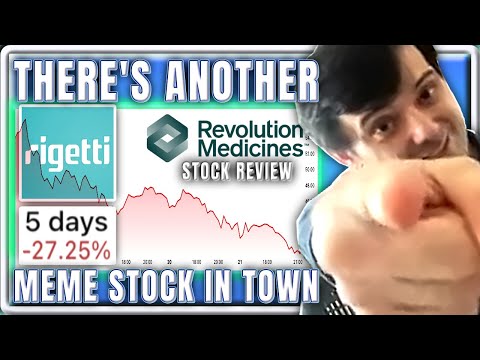
Short Regetti Trade Call
"Expensive, man. I would just keep shorting Regetti. Regetti CEO is presenting at this conference."
The speaker explicitly recommends shorting Regetti, noting that the stock is expensive despite the CEO speaking at a conference. The suggestion implies that the company's fundamentals or valuation might be off.

Lloyds Provision Warning Signals Short-Term Headwinds
"So Lloyds firstly, they issued a warning this morning saying they have to set aside more money and that's to compensate customers over the long ongoing long-running car loan saga in the UK. So just to recap that the UK's FCA the regulator said they expect banks or auto lenders relevant auto lenders to take about an 11 billion pound hit and that's to compensate customers. This is less than expected but obviously still hefty and lawyers have responded to that this morning, saying that they have to set aside more cash."
Louise Moon discusses Lloyds issuing a warning to set aside additional funds for a long-running car loan issue, noting that while the hit is less than expected, it remains substantial and could be material. The commentary highlights potential near-term pressure on the stock as further provisioning might be required.

Close Brothers Faces Short-Term Financial Hit but Eyes Longer-Term Growth
"Close Brothers recorded a 30 million pound impairment charge following the disposal of its vehicle hire business, and set aside another 33 million to implement a redress program for customers. Despite this tough morning, analysts note that exiting this business, combined with a favorable UK Supreme Court decision over car finance commissions, could lay the foundation for future growth."
Close Brothers is undergoing short-term financial setbacks due to an asset disposal and related expenses. However, a recent legal win and the strategic exit from its vehicle hire business may provide a platform for long-term improvement, balancing near-term pain against potential future benefits.