He Made +27% Returns Last Year Researching Underfollowed Stocks
January 26, 2026

Nicholas Cortellucci
Small Cap Research atriumresearch.ca
To start things off, who are you and what do you do today?
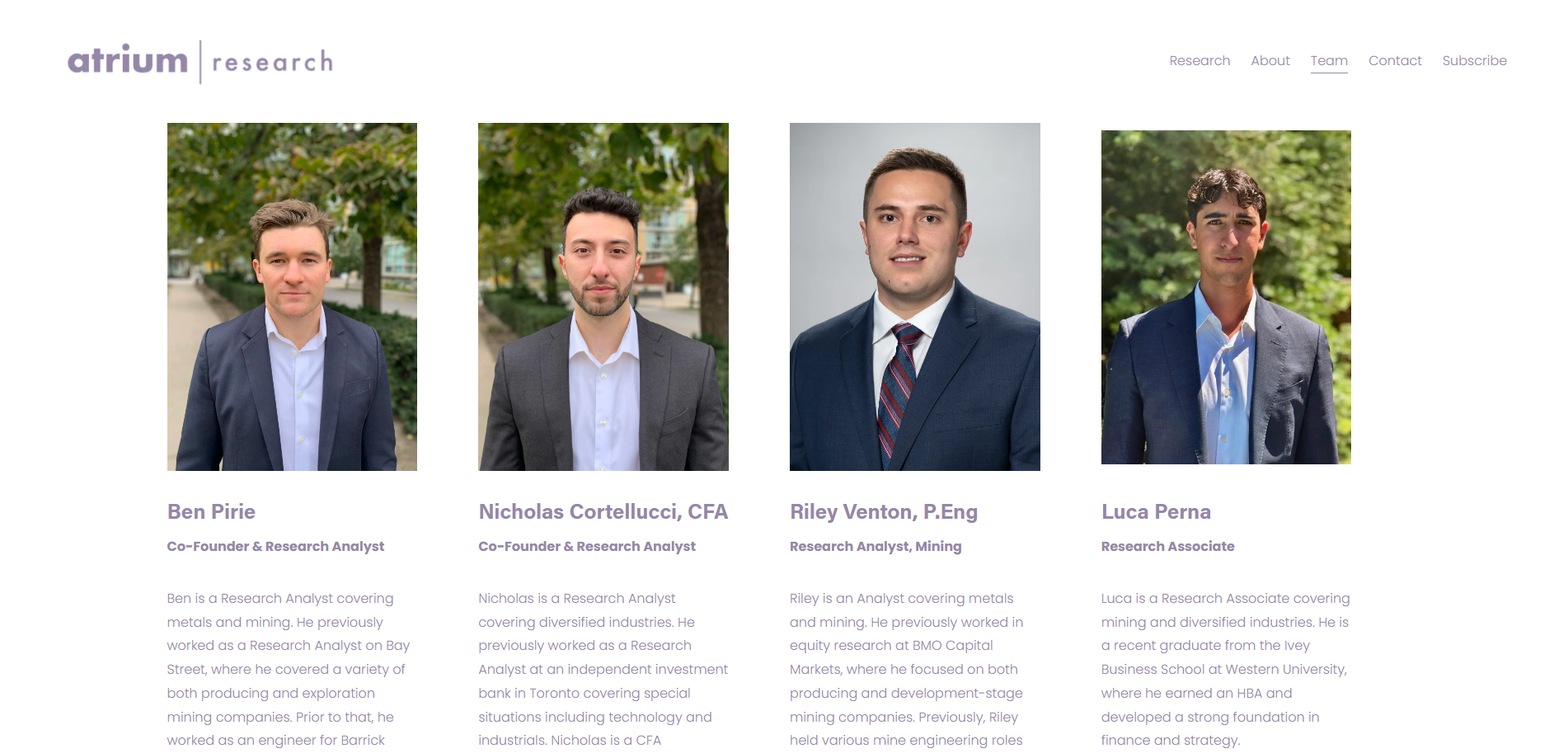
I currently run Atrium Research, which is a sponsored equity research firm that I co-founded with my partner, Ben, about three years ago.
Before starting Atrium, both of us worked on the sell side as research analysts at an investment bank. While we were there, we noticed a major gap in the market: there are many publicly traded companies that receive little to no research coverage. Without analyst coverage, it’s hard for investors to understand these businesses, and it’s hard for companies to tell their story.
That’s where the sponsored research model comes in. We work with under-followed companies, often those with zero or one analyst covering them and produce institutional-quality research. This includes initiation reports, ongoing updates, financial models, target prices, estimates, and management interviews.
All of our research is made freely accessible on our website and distributed through email, social media, and YouTube. Our goal is to use research as a marketing tool to help high-quality but under-the-radar companies get in front of both retail and institutional investors globally.
Today, we cover roughly 35 companies across several sectors. I focus on diversified industries, including industrials, consumer, and some technology.
Atrium seems especially active in metals and mining. Is that a core focus?
Yes, metals and mining make up about two-thirds of our coverage, led by my partner Ben and another analyst on our team. It’s been a strong area for us, especially given the tailwinds the sector has seen over the last year.
That said, my coverage is more diversified, and I focus on finding compelling opportunities outside of pure commodities.
You also share your personal investing ideas publicly. How did your investing journey start, and how would you describe your style today?
My first exposure to investing was actually in high school, I joined the investment club mostly because they had pizza and chocolate. But it planted the seed.
I went on to study finance in university and really fell in love with analyzing companies. I participated in stock pitch competitions, joined investment clubs, and did internships in the space. Over time, I gravitated toward smaller-cap companies because the upside potential is often much greater.
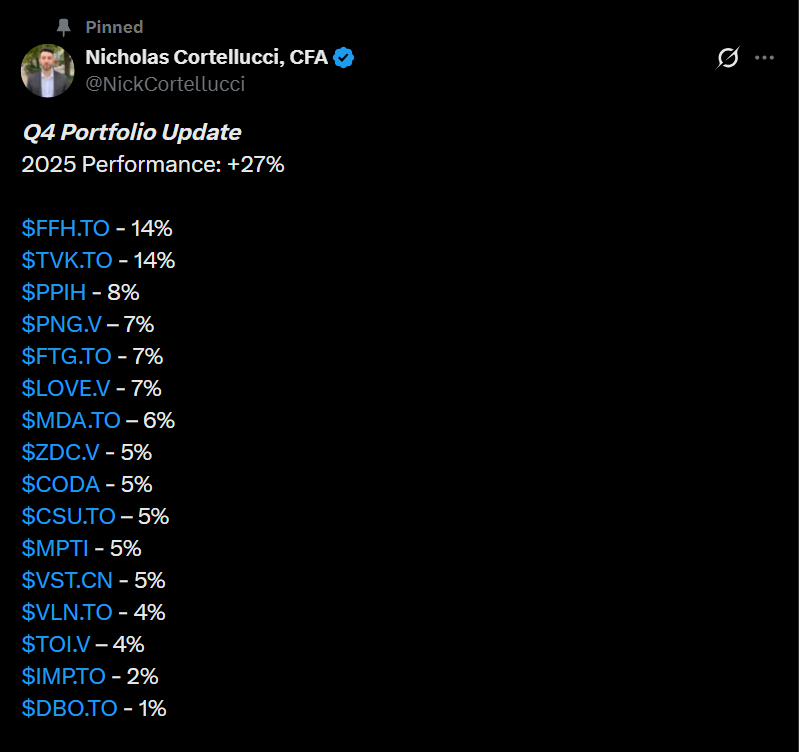
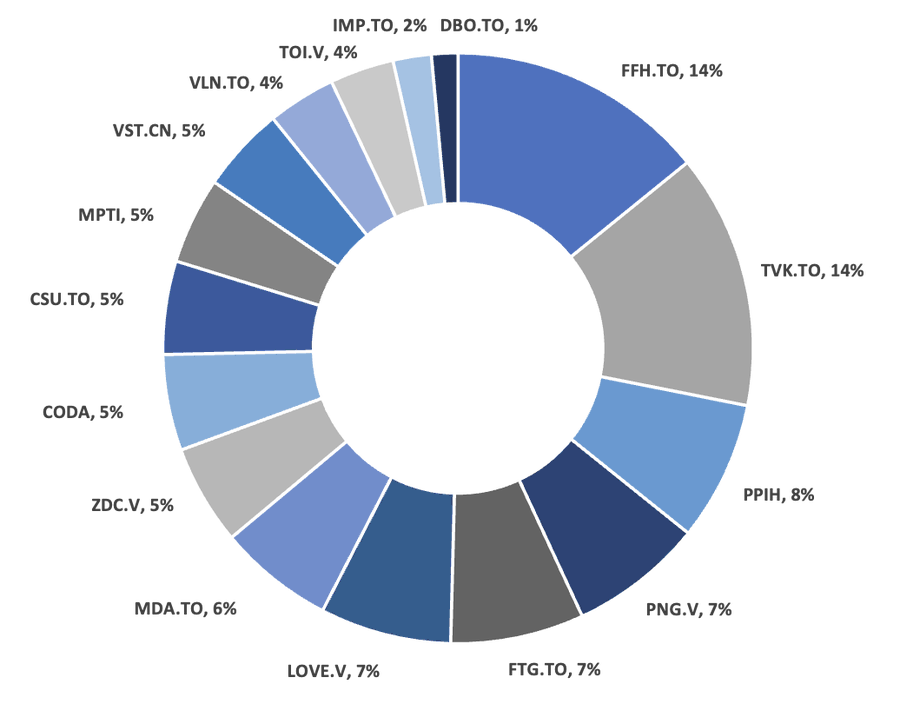
After graduating, I joined an investment bank as a research associate, which helped formalize my process. Today, I still invest my own capital and share my thoughts publicly, what I’m buying, selling, and how my views evolve.
When you’re looking for small-cap or micro-cap opportunities, do you follow a specific process?
I’d describe it as more of an art than a science.
A lot of people assume small-cap investing is completely different from large-cap investing, but many of the fundamentals are the same, growth, margins, cash flow, valuation. What changes is what you emphasize.
Management quality becomes critical. In small companies, leadership can make or break the business. I want to see executives with skin in the game, strong track records, or relevant experience.
Capital structure is another huge factor. Many small caps dilute shareholders, issue warrants, or carry weak balance sheets. Understanding the share structure and financing risk is essential.
Finally, valuation inefficiencies are far more common in small caps. Historically, small caps traded at a premium to large caps, but today that relationship is flipped. That creates opportunities where the risk-reward can be extremely asymmetric.
Are there any companies you’re particularly excited about right now?
I’ll focus on names that Atrium covers so people can review the research themselves.
One standout from last year was Santa Cruz Silver, which ended up being one of the top-performing stock pitches of 2025. The company benefited from rising silver prices but also executed operationally — growing production, reducing costs, and strengthening its balance sheet. That combination led to exceptional returns.
On my side of coverage, one of my top picks right now is Rubicon Organics. Cannabis investing is deeply out of favor, but the industry itself is still growing. Rubicon stands out because it operates in the premium segment, has grown revenue every year since going public, and has been profitable for multiple years.
The company recently acquired a new facility in British Columbia that will increase production capacity by about 40%. It also trades at a very low EBITDA multiple despite having a clean balance sheet and a management team with deep consumer-packaged-goods experience.
Another recent initiation is Diamond Estates Wines. This is a turnaround story that’s already well underway. Margins have improved dramatically, the company is approaching net profitability, and it has strong positioning in grocery and convenience channels through its partnership with Lassonde Industries.
With additional tailwinds like Canada’s “Buy Canadian” initiative, Diamond is starting to attract attention again — either as an acquisition target or as a re-rated public company.
What tools or data sources do you rely on in your research process?
Twitter (X) has become increasingly important. It’s one of the best places to discover new ideas, see how investors react to news, and get exposure to companies you might never find otherwise.
Beyond that, we rely on company filings, Capital IQ for financial data, and in Canada specifically a platform called CEO.ca. It’s similar to Stocktwits but includes press releases, insider filings, and a more robust investor community.
What advice would you give to new investors or your younger self?
Get more reps.
When you’re starting out, it’s easy to focus on theory,textbooks, formulas, valuation models. That’s important, but it’s not enough. The best way to learn how to invest is to analyze a lot of companies, turn over a lot of rocks, and invest real money.
You’ll make mistakes. You’ll lose money. You’ll also learn faster than any textbook could teach you. Investing is a skill you develop by doing,not just studying.